
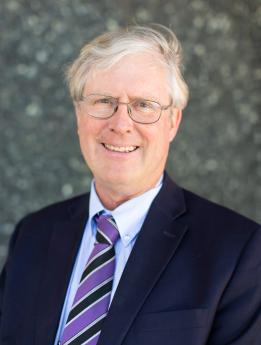
Executive Director
Ph.D.
It has been my honor to serve as The Smith-Kettlewell Eye Research Institute’s Executive Director since 2011. Previously, I have also served as Director of our Rehabilitation Engineering Research Center (RERC) and Principal Investigator of the Brabyn Lab. My research focused on addressing problems of blindness and visual impairment, particularly those that may be amenable to technological solutions. Projects in my laboratory have included the development and application of new tests for the assessment of functional vision, and studies of the problems and solutions of dual sensory loss. My research interests and approaches reflect my vision for the Institute, which combines multidisciplinary approaches and expertise across basic, clinical, and engineering/translational fields to address real-world challenges of those living with sensory loss, particularly vision.
Contact Information:
Email: brabyn@ski.org
Office Phone: (415) 345-2110
The Smith Kettlewell Eye Research Institute 2318 Fillmore Street
San Francisco, CA 94115
Links:
LinkedIn Personal PagePublications



Projects
 CompletedTalking Signs
Created by William Loughborough in 1979, Talking Lights was a system of infrared transmitters and receivers allowing blind and visually impaired travelers to quickly and easily “read signs” at a distance.
 ActiveThe 3 Ps of 3D: Perception, Pedagogy, and Practice for 3D Printing
3D printing is increasingly used in STEM education. How can it be made usable by students who are blind or visually impaired?
 CompletedThe Smith-Kettlewell Haptics Symposium
The Smith-Kettlewell Haptics Symposium was held on March 29, 2018 to honor and remember Dr. Val Morash and her research.
 InactiveReading, Vision Function and Disease Progression in Early to Intermediate AMD
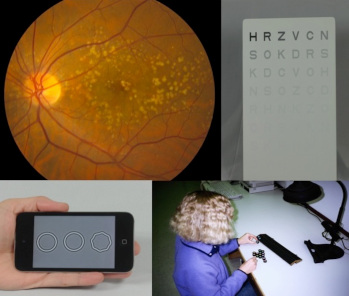
Most prior research on reading in people with age-related macular degeneration (AMD) has focused on those with advanced disease. The first goal of this project is to examine the visual, motor, and cognitive factors that contribute to reading performance in people with early to intermediate(E/I) AMD. A second goal is to compare those with E/I AMD to age-matched groups with no AMD, and with advanced disease to determine which characteristics of the E/I AMD participants more closely match those with advanced AMD. The final goal is to assess our E/I AMD participants longitudinally to determine…
 CompletedAcoustic Cues for Wayfinding
This project aims to do a detailed analysis of the environmental acoustic cues that help some blind navigate successfully.
Centers
 Rehabilitation Engineering Research CenterThe Center's research goal is to develop and apply new scientific knowledge and practical, cost-effective devices to better understand and address the real-world problems of blind, visually impaired, and deaf-blind...


