
Principal Investigator:
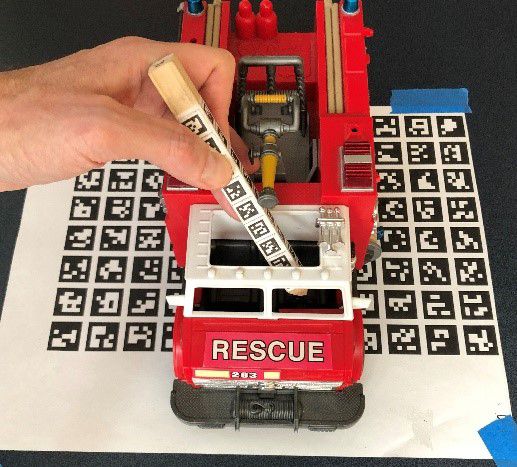
James CoughlanCamIO (short for “Camera Input-Output”) is a system that enables blind and visually impaired individuals to interact with physical objects (such as documents, maps, devices, and 3D models) by providing real-time audio feedback based on the location that they are touching.
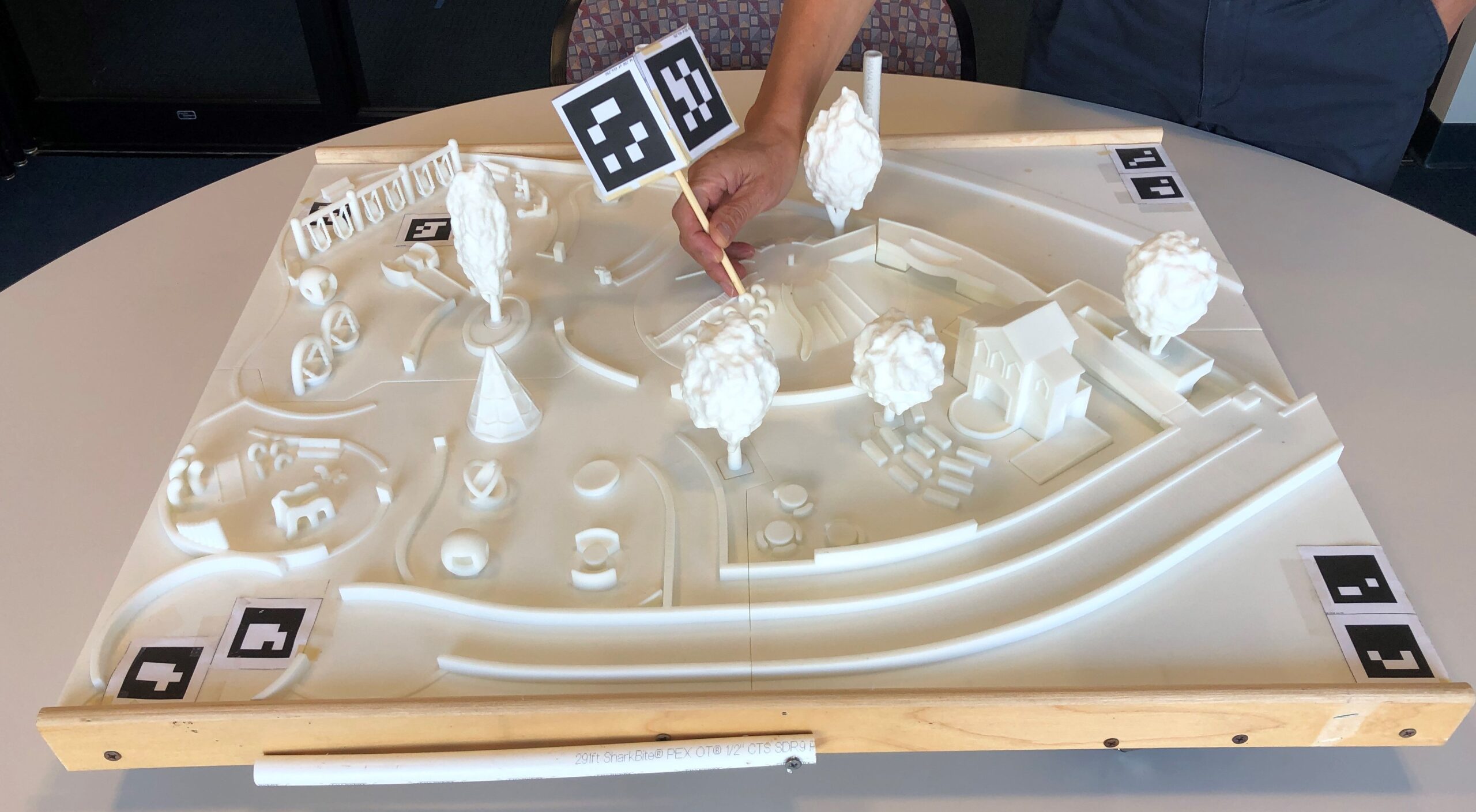
See a short video demonstration of CamIO here, showing how the user can trigger audio labels by pointing a stylus at “hotspots” on a 3D map of a playground. See the Magic Map project page for more information on this specific application of CamIO. Longer videos explaining how CamIO fits into the Magic Map approach are here: Camio by James Coughlan and CamIO by Brandon Biggs.
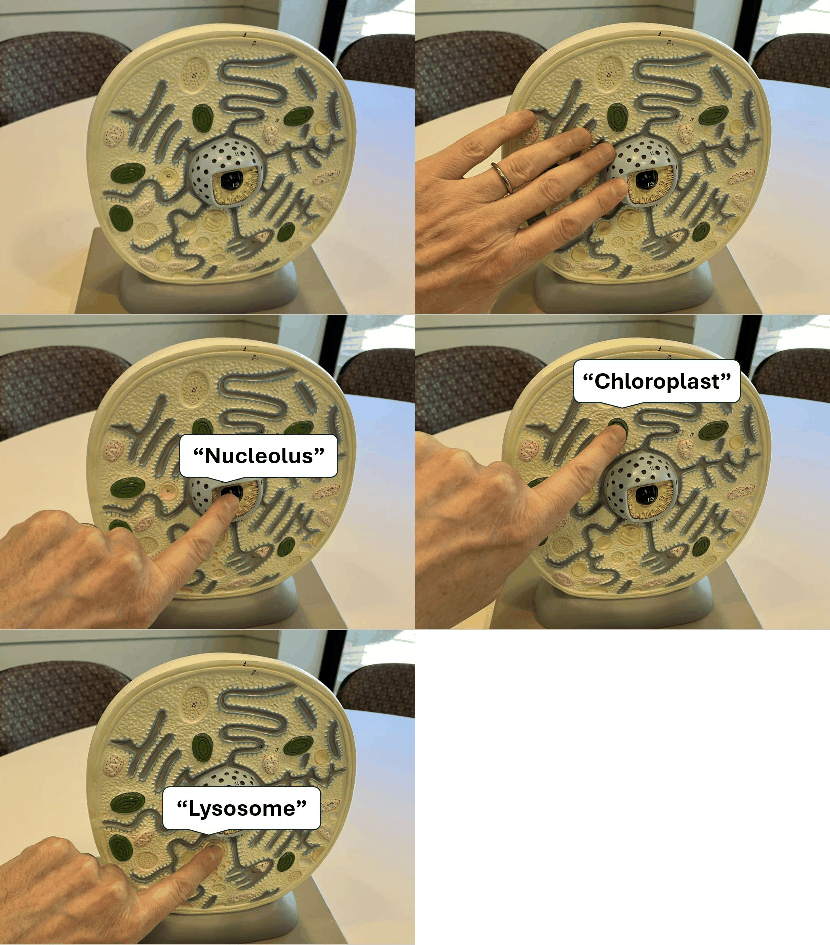
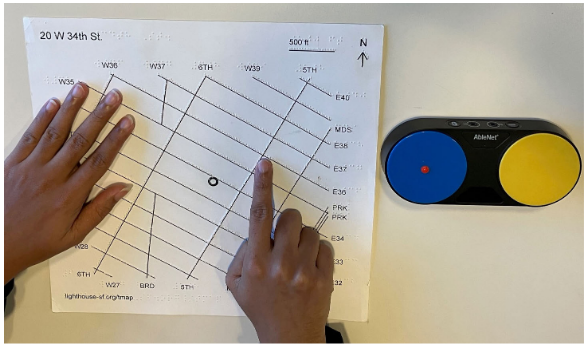
In collaboration with Dr. Sergio Mascetti, Dr. Dragan Ahmetovic and others at Univ. Milan, we have modified CamIO to function by tracking the user’s hands and fingers, eliminating the need for any stylus. One study, called CamIO Hands, allows the user to tap multiple times to elicit different types of information about a feature on a tactile graphic. A recent extension of this project, called MapIO, adds a conversational interface to CamIO applied to a tactile map, so that the user can ask questions about the map (such as “Where is the nearest Italian restaurant?”) and hear answers read aloud by the system, including real-time guidance to a desired destination on the map. Finally, the new CamIO-Web project allows the user to run CamIO in the browser on virtually any mobile, tablet or computer device. It includes two components: CamIO-Explorer, which allows the user to explore any flat tactile graphic, and CamIO-Creator, which is a tool that enables the annotation of any tactile graphic.
A CamIO-Web system has been installed in the Google Accessibility Discovery Center (ADC) in Milan, where it is used to add interactivity to a tactile map of the ADC space.
The CamIO project received the 2020 Dr. Arthur I. Karshmer Award for Assistive Technology Research. It was supported by a four-year grant from NIH/NEI (R01EY025332), which was renewed in 2022 for another four years (2R01EY025332-05A1). It has also received support from the NIDILRR RERC (grant numbers 90RE5024 and 90REGE0018).
Events
No upcoming events found.
Publications

Projects
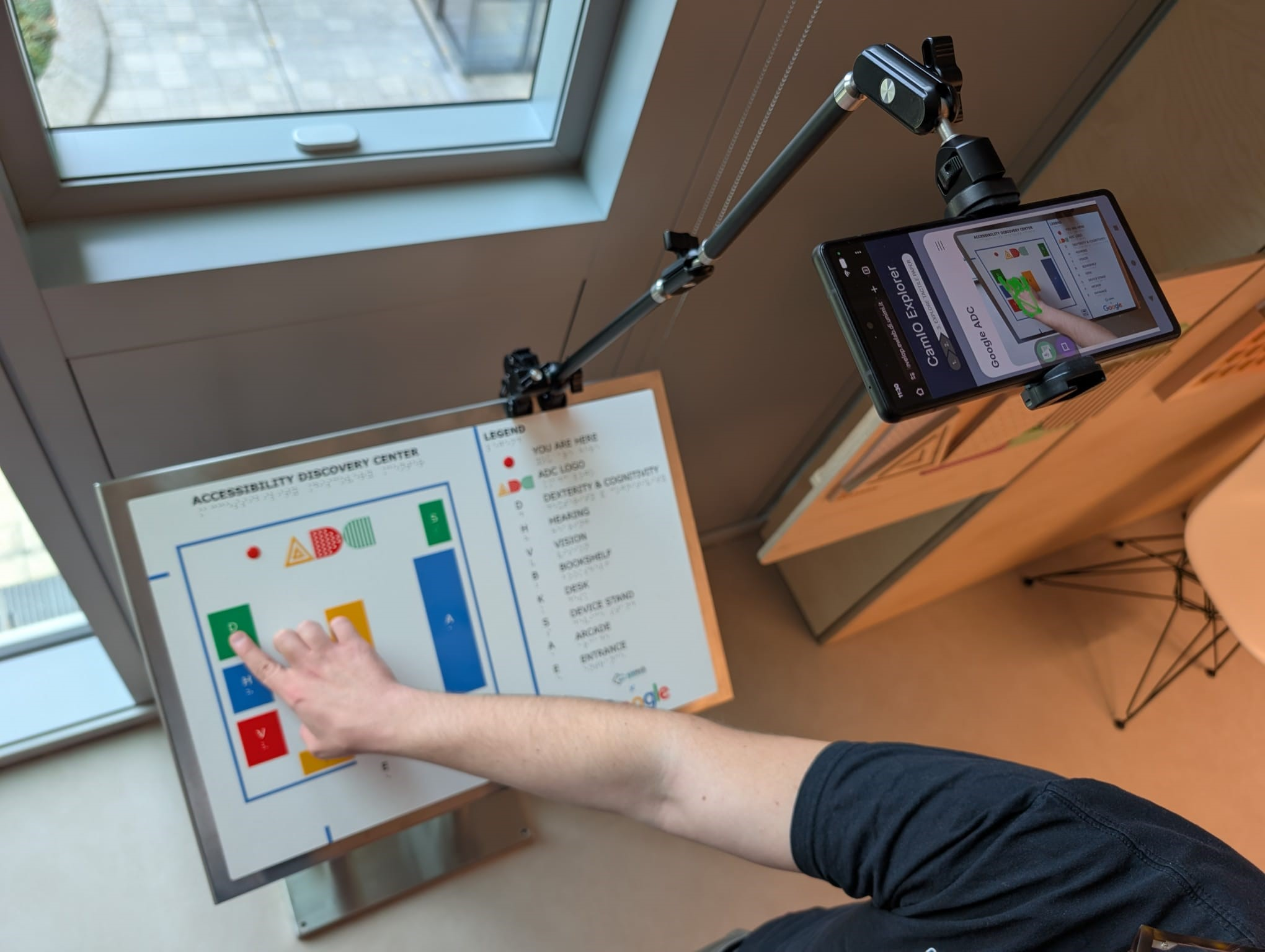
Interactive Tactile Map at Google ADC Milan
This is an installation of the CamIO project that adds interactivity to a tactile map of the Google Accessibility Discovery Center in Milan, Italy.
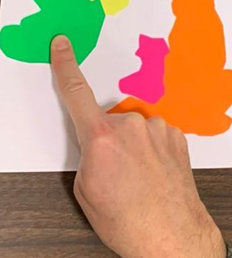
CamIO Hands
This project builds on the CamIO project to provide point-and-tap interactions allowing a user to acquire detailed information about tactile graphics and 3D models.
The interface uses an iPhone’s depth and color cameras to track the user’s hands while they interact with a model. When the user points to a feature of interest on the model with their index finger, the system reads aloud basic information about that feature. For additional information, the user lifts their index finger and taps the feature again. This process can be repeated multiple times to access additional levels of…
Centers
 Rehabilitation Engineering Research CenterThe Center's research goal is to develop and apply new scientific knowledge and practical, cost-effective devices to better understand and address the real-world problems of blind, visually impaired, and deaf-blind...
People
Current People
 Sergio MascettiSergio Mascetti is Associate Professor at the Department of Computer Science of the Università degli Studi di Milano where he also received his BSc, […]


Funding
Collaborators
External Collaborators
News
 CamIO Receives Supplement to Enhance Software Tools for Open ScienceDr. James Coughlan has been awarded funds to increase access to his CamIO tool for making objects accessible to blind and visually impaired persons. The funds were part of NIH's Notice of Special Interest for...
Get Involved
If you are interested in vision science or want to learn more about low vision and blindness, there are many opportunities to get involved at The Smith-Kettlewell Eye Research Institute.