
Engineer
MDes, Inclusive Design, OCAD University
BA, Music, CSU East Bay
AA, Music, Foothill College
The goal of my research is to create technology for blind individuals that have an amazing user experience. I focus on web applications and building progressive web apps.
Publications


Projects
 ActiveAudiom Map of Smith-Kettlewell
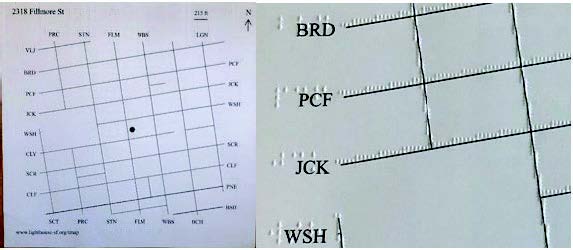
An Audiom map of the main Smith-Kettlewell building at 2318 Fillmore St., San Francisco has been created by Brandon Biggs. This is an audio-visual map that allows users to explore a detailed map of the building with or without vision. The map runs in any browser and is available to anyone who visits the building.
 ActiveMagic Map
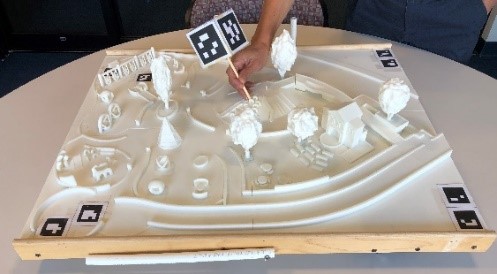
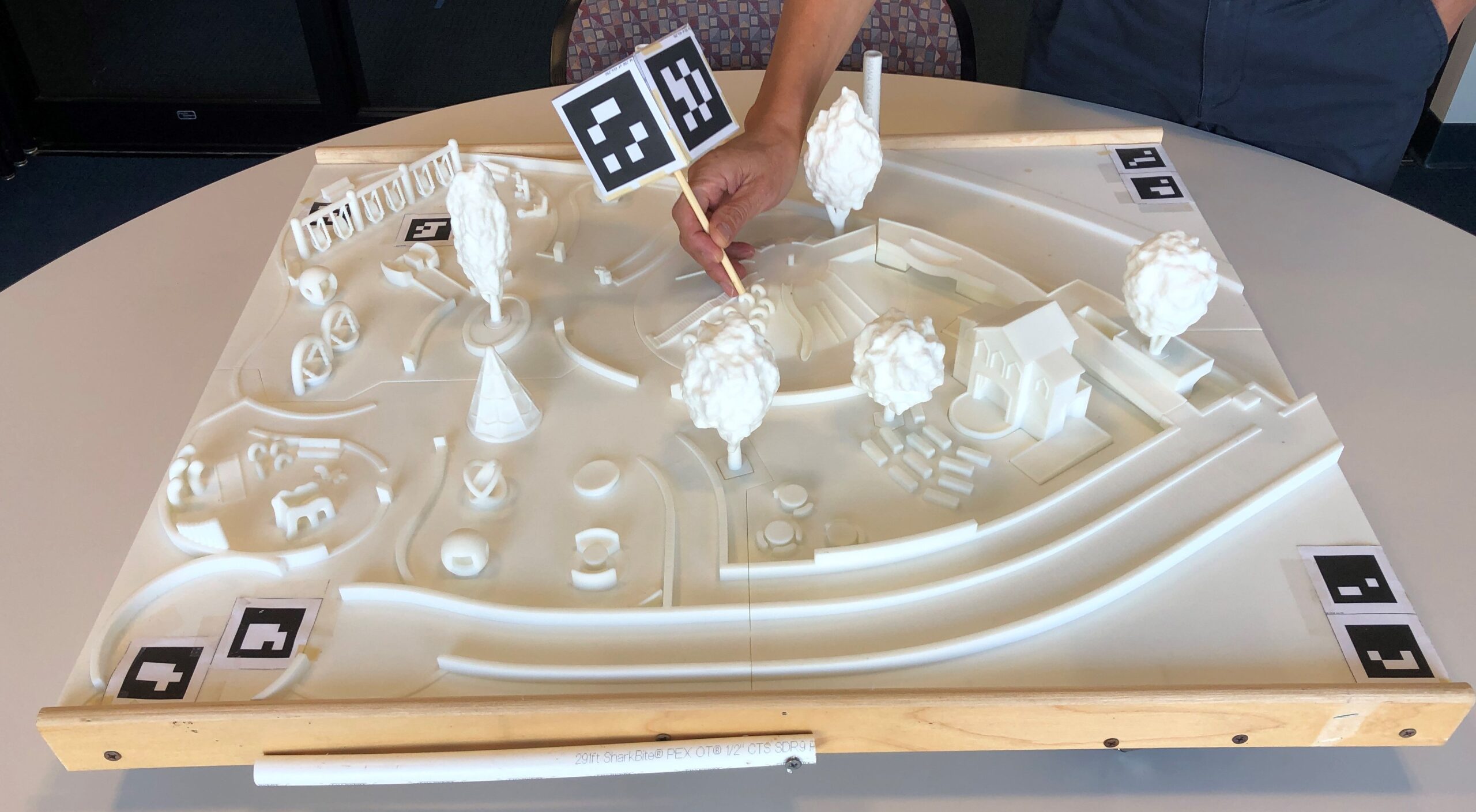
The Magic Map is an interactive 3D map installed at the Magical Bridge Playground in Palo Alto, California. It consists of a 1/100 scale 3D bronze representation of the playground, which includes over seventy play structures organized into multiple play zones and paths. When the user’s index fingertip touches a specific feature on the map, the name and description of the feature are read aloud in audio. This interactivity allows visitors with visual impairments to navigate the map without requiring them to read braille.
 ActiveAudiom
Audiom is a tool that allows blind and visually impaired individuals to view maps completely in audio. It is a web component and can be embedded into any webpage, similar to Google Maps. It allows non-visual use of route, landmark, and survey knowledge, which is the critical information needed for navigation.
 ActiveA Computer Vision-Based Indoor Wayfinding Tool
The ability to navigate safely and confidently is a fundamental requirement for independent travel and access to many settings such as work, school, shopping, transit and healthcare. Navigation is particularly challenging for people with visual impairments, who have limited ability to see signs, landmarks or maps posted in the environment.
 ActiveCamIO
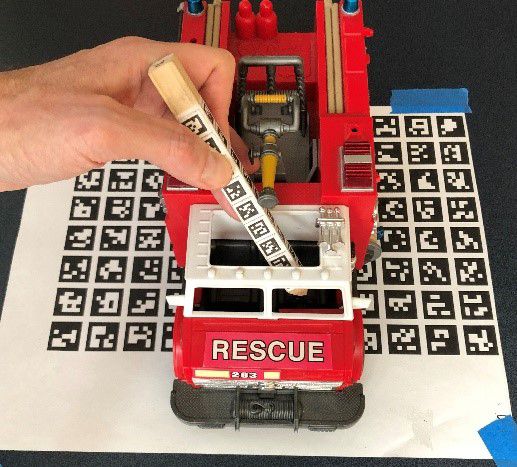
CamIO (short for “Camera Input-Output”) is a system to make physical objects (such as documents, maps, devices and 3D models) accessible to blind and visually impaired persons, by providing real-time audio feedback in response to the location on an object that the user is touching. CamIO currently works on iOS using the built-in camera and an inexpensive hand-held stylus, made out of materials such as 3D-printed plastic, paper or wood.
See a short video demonstration of CamIO here , showing how the user can trigger audio labels by pointing a stylus at “hotspots” on a 3D map of a playground. See…
Labs
 Coughlan LabThe goal of our laboratory is to develop and test assistive technology for blind and visually impaired persons that is enabled by computer vision and other sensor technologies.
Centers
 Rehabilitation Engineering Research CenterThe Center's research goal is to develop and apply new scientific knowledge and practical, cost-effective devices to better understand and address the real-world problems of blind, visually impaired, and deaf-blind...